
Key Takeaways
- Coastal homes must account for wind, wind-driven rain, flooding, salt air, and everyday comfort.
- Storm readiness is most effective when the roof, walls, openings, drainage, and foundation are planned as one system.
- Exterior doors and windows should fit local code requirements, site exposure, and the home’s architectural style.
- Drainage, cleaning, and routine inspections can help identify small exterior issues before they become larger repairs.
- Final plans should be reviewed by qualified local professionals and the appropriate building authority.
Coastal living offers distinctive views and outdoor access, but it also creates design demands that are easy to underestimate. A home near the water may face high winds, airborne debris, heavy rain, standing water, humidity, salt spray, sand, and intense sun. Selecting durable components early, with the guidance from experts at https://grandentrydoors.com/coastal-and-impact-rated-doors/, can help homeowners coordinate the entry system with the rest of the exterior.
Good coastal design is not about making a home look fortified. It is about combining practical protection with proportion, light, curb appeal, and comfortable daily use. A traditional cottage, contemporary beach house, or elevated coastal retreat can all incorporate materials and details suited to the property’s specific exposure.
Why Coastal Home Design Requires More Planning
Unlike many inland properties, coastal homes can be exposed to multiple hazards simultaneously. Strong winds can stress roof edges and exterior openings, while wind-driven rain can exploit gaps in flashing, sealants, thresholds, and cladding. Flooding and storm surge introduce a different set of concerns involving elevation, drainage, utilities, and site access.
Long-range planning is also part of the conversation. Coastal adaptation planning has highlighted how communities are considering flooding, erosion, infrastructure, and property protection together. For an individual homeowner, that perspective supports a more complete approach to construction and maintenance.
Start With the Local Building Code
Before choosing doors, windows, roofing, or exterior finishes, identify the property’s governing requirements. Local rules can vary by wind zone, flood zone, building height, exposure category, and distance from open water.
- Confirm the site’s wind and flood designations.
- Ask whether the address falls within a wind-borne debris region or high-velocity hurricane zone.
- Review required design-pressure ratings for each exterior opening.
- Determine whether product approvals, test reports, permits, or engineered details are required.
- Have a licensed contractor, architect, engineer, or building official review specifications before materials are ordered.
Think of the Home as One Connected System
A coastal home performs best when its building envelope is continuous. The roof covering, roof-to-wall connections, wall finishes, windows, doors, fasteners, flashing, drainage plane, and foundation all have related roles. A highly rated door will not compensate for poor flashing, incompatible hardware, or an improperly prepared opening.
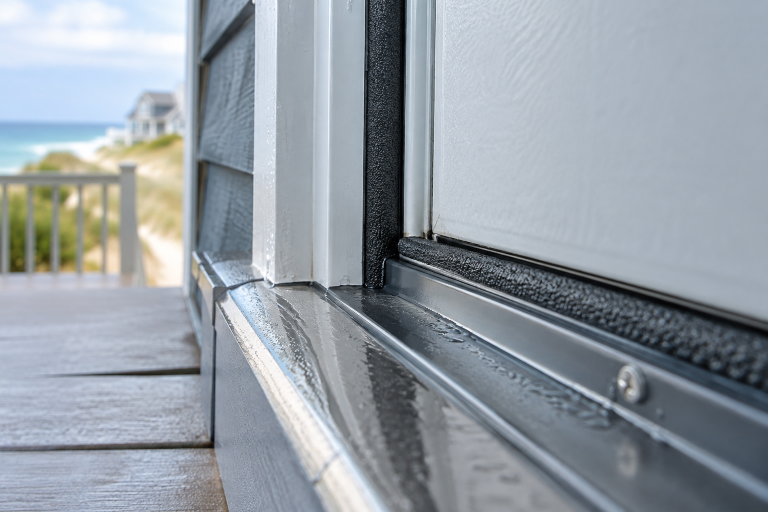
Installation matters as much as a product’s listed performance. Proper shimming, fastening, weather sealing, sill-pan installation, and integration with the wall’s water-resistive barrier help direct water outward rather than into the structure. Contractors should follow the product documentation and applicable local requirements for the exact opening configuration.
Choose Exterior Doors for Both Performance and Style
Coastal entry doors should be evaluated as assemblies, not as decorative slabs alone. Depending on the location and approved configuration, a suitable door system may include reinforced frames, a durable core, tested glazing, weather seals, corrosion-conscious hardware, and multipoint locking components.
Door layouts affect the specification. A single entry door, double-door unit, French door, sidelight, or transom assembly may require different ratings, anchoring details, and glass options. Homeowners can still pursue classic panels, divided-light glass, modern flush faces, natural wood tones, or custom finishes while selecting a system appropriate for the site.
It is also wise to treat “hurricane-proof” as marketing shorthand rather than an absolute promise. No door can remove every risk from a severe storm. The meaningful question is whether the complete, installed assembly meets the applicable requirements for its intended location.
Control Water Before It Reaches the Door
Water management begins beyond the threshold. Keep the grade sloping away from the home, clear gutters and downspouts, and avoid landscaping that funnels runoff toward entry doors. At the opening itself, inspect the flashing, sealants, thresholds, sill pans, and drainage paths to ensure water has a controlled route away from vulnerable materials.
Plan for Salt Air and Daily Wear
Salt, humidity, sand, and ultraviolet exposure can affect coatings, hardware, weatherstripping, and sealants over time. Use cleaning products approved for the specific finish and hardware, and schedule a visual inspection at least annually. Additional checks after major storms or periods of heavy salt exposure are sensible.
For example, a homeowner who notices cracked perimeter sealant, worn weatherstripping, or early finish damage during a routine inspection can arrange targeted maintenance before moisture reaches adjacent trim or framing. Small repairs are often easier to plan than a larger restoration discovered after prolonged exposure.
Consider the Full Property, Not Just the Entry
Storm planning should extend to roof coverings, garage doors, windows, shutters, elevated utilities, drainage features, decks, fences, sheds, and outdoor furniture. Loose items can become airborne in high winds, while neglected drainage can concentrate water near the building.
Natural and community-scale features matter as well. Beaches, dunes, and sand management can contribute to coastal risk reduction, as illustrated by the use of sacrificial sands along the Grand Strand. These measures do not replace property-level preparation, but they show why the broader shoreline environment deserves attention.
Build a Practical Storm Preparation Checklist
- Inspect exterior doors, windows, roof edges, vents, trim, and visible sealants.
- Store or secure furniture, planters, grills, tools, and other loose outdoor objects.
- Test backup power equipment and emergency lighting, if installed.
- Photograph the home and important belongings for insurance documentation.
- Review local alerts, evacuation routes, medications, key documents, and essential supplies.
Common Questions About Coastal Home Planning
Does Every Coastal Home Need the Same Storm Features?
No. Requirements can vary by jurisdiction, flood and wind classifications, elevation, building height, exposure, and opening location.
Are Stronger Doors Always Better?
The best choice is the correctly rated, properly sized, compatible, and correctly installed system approved for the project.
Can a Storm-Ready Home Still Have a Traditional Look?
Yes. Protective performance can be paired with classic detailing, glass panels, arched openings, warm finishes, or clean modern profiles.
Final Planning Tips
- Begin with local code and site conditions.
- Evaluate each opening within the complete building envelope.
- Select materials with moisture, salt, and sun exposure in mind.
- Plan drainage and maintenance before construction begins.
- Keep records of approvals, specifications, inspections, and repairs.
Conclusion
Visit this website: The Lincolnshire Property Odyssey: A Journey with Local Estate Agents
Coastal home design in 2026 requires a balanced strategy. Storm readiness, visual appeal, water control, and routine care should reinforce one another. When homeowners treat every opening and exterior system as part of the full property, they can create a welcoming home that is better prepared for demanding coastal conditions.